
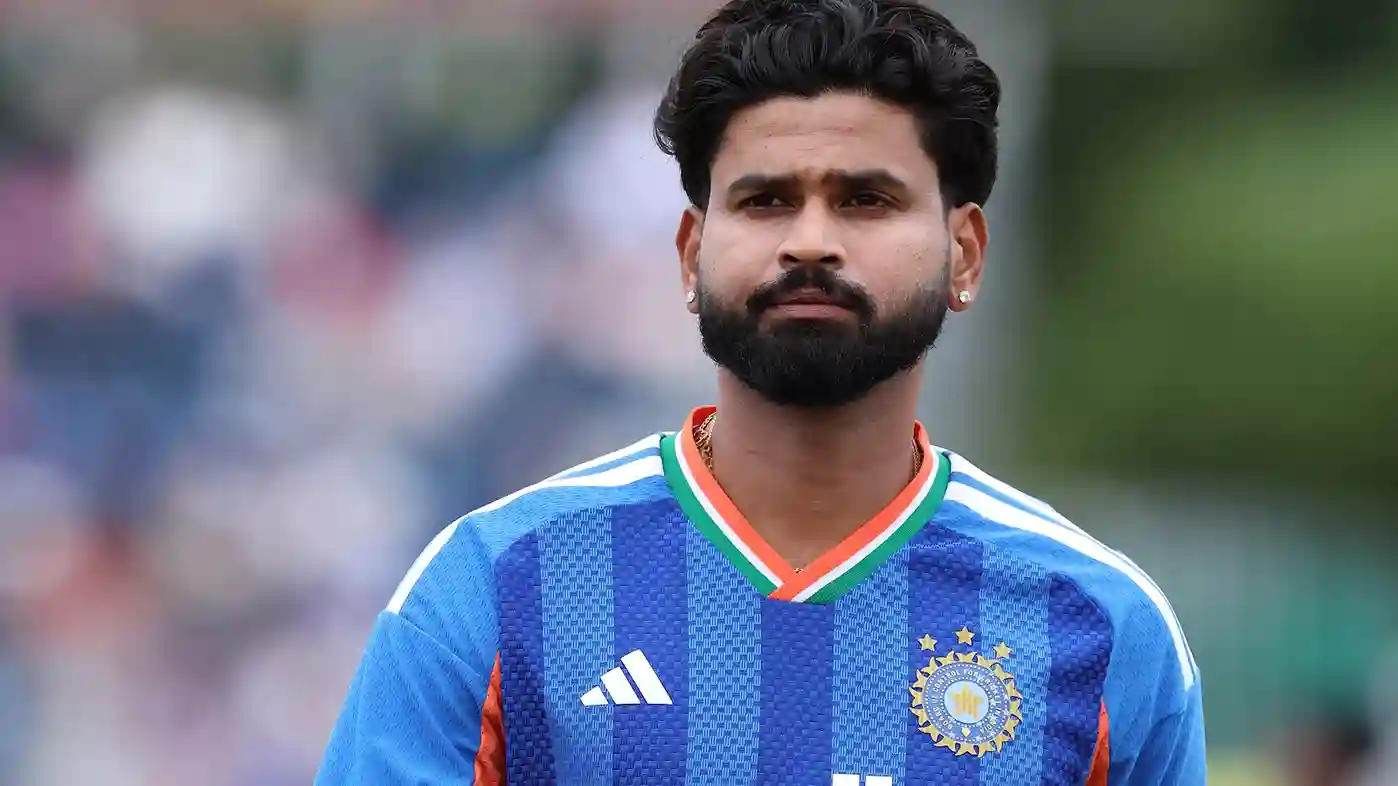
Shreyas Iyer's tenure as India's T20I captain has begun on a rocky note, with the side still searching for their first victory under his leadership. Having led the side in seven games as in charge, Iyer is yet to go over the line, putting him under massive scrutiny. India's struggles started with a disappointing 2-0 series defeat against Ireland. The historic setback brought a tough start for the new captain.
Recently, India went 0-4 down against England in the five-match series. After the opening match was abandoned due to persistent rain, England went on to dominate the remaining four games, not allowing India to even win a single game.
The defeat against England was historic, as it marked England's first-ever bilateral T20I series victory over India. Meanwhile, former India batter Wasim Jaffer has backed Shreyas Iyer, saying that the defeats should not be pinned solely on the captain.
"I don't think he captained poorly. No one suddenly becomes a bad captain overnight. We've been praising him for a long time, and the results are there for everyone to see, especially the way he led his IPL team. This is his first opportunity to captain India in international cricket, so he's in new territory. I think he'll handle it. He has the confidence and self-belief to do so. He scored runs as well. Collectively, as a team, we played poorly. But I think Shreyas Iyer is not a bad choice going forward. In my opinion, he did a decent job," Jaffer said on his YouTube channel.
Jaffer further asserted that India played with the mindset of testing their combinations.
"I feel that this series was, in a way, treated as a trial. We gave opportunities to some new players, appointed a new captain, and were without Jasprit Bumrah and Hardik Pandya. We also didn't include Kuldeep Yadav in this series. So, I think it seemed that the selectors and the coaches, especially Gautam Gambhir, wanted to try a few players and see whom they could trust going into the World Cup. It felt like the idea was to put these players into this series and see how they performed," Jaffer said.
"Winning didn't seem to be the primary focus. Of course, you always want to win, but the bigger objective appeared to be to assess how these players performed in overseas conditions. That would probably give them an answer as to whether these players are long-term prospects or whether they aren't the right fit. That's the impression I got from these two series. It seemed like they wanted to try out a few players and figure out which ones they could back going forward and which ones they couldn't," he said.