
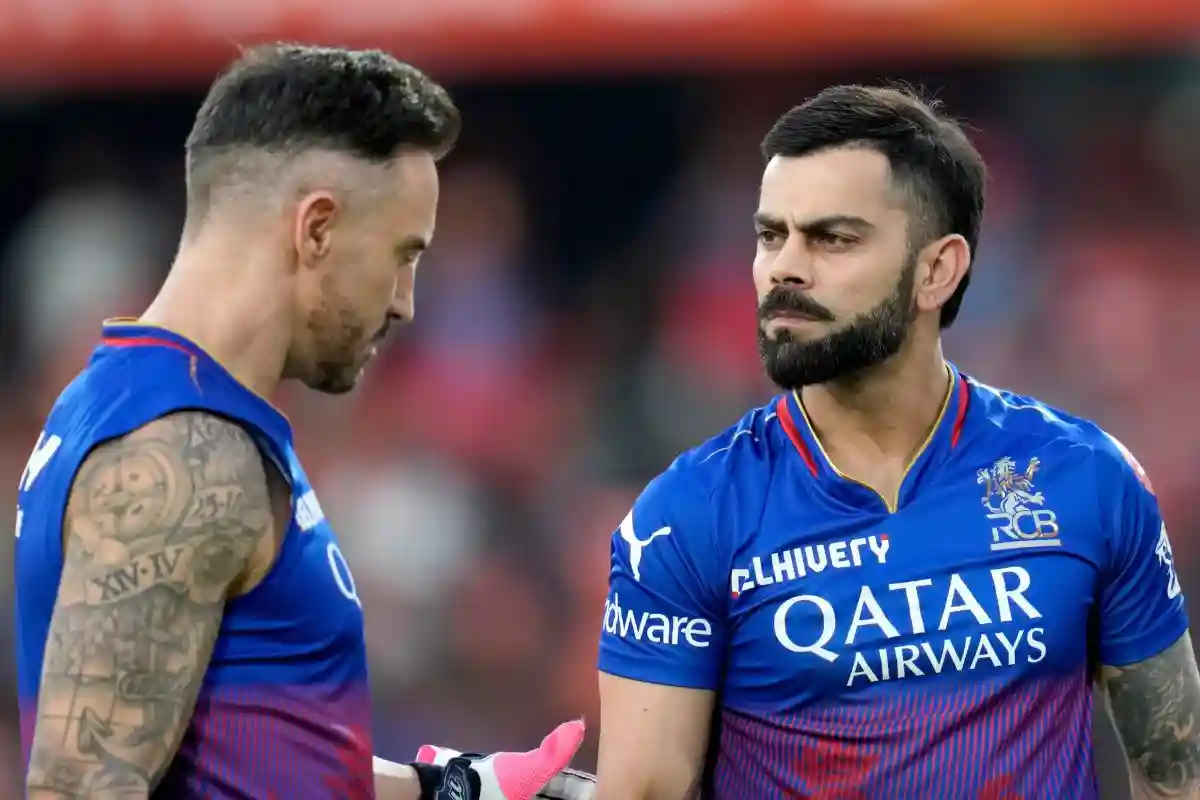
Former South Africa captain Faf du Plessis has shared an intriguing anecdote about Virat Kohli’s uncompromising leadership during his tenure as India’s Test captain, highlighting the Indian batting great’s competitive mindset and determination to win. Speaking on the Prakhar Gupta Podcast, Du Plessis recalled a Test match between India and South Africa at the Wanderers in Johannesburg, where the pitch became extremely dangerous for batters. Kohli, who led India to 40 victories in 68 Tests, was determined to maintain his team's advantage despite the challenging conditions.
“I remember a Test match at Wanderers, and the pitch was dangerous, really dangerous. Dean (Elgar) got hit on the head by a length delivery. I thought, 'Someone could die out here today.' It felt extremely dangerous because the ball could hit you on the throat, and there was a lot of pace in the wicket,” he said. According to Du Plessis, India were slightly ahead in the contest, and Kohli wanted his players to remain composed and avoid reacting to blows from the fast bowlers, as any stoppage could affect the team's advantage.
“The message to the Indian batters was clear: even if you got hit on the glove, hand, head, or throat, don't show any reaction because the game might get called off,” he recalled. Praising Kohli’s leadership style, Du Plessis said the former India captain inspired his teammates through his own intensity and willingness to push physical limits. “They were hit many times. However, there was a toughness instilled by the way he played the game. We always talk about leaders who lead from the front. Your actions are far more powerful than your words,” he added.
Kohli took over India's Test captaincy from MS Dhoni in 2014 and stepped down in January 2022, following India's Test series defeat in South Africa. Under his leadership, India recorded 40 wins in 68 matches, making him the country's most successful Test captain by victories. Although he has since retired from Test cricket and now represents India only in ODIs, Kohli's aggressive approach and emphasis on fitness and competitiveness remain defining features of his leadership legacy.