
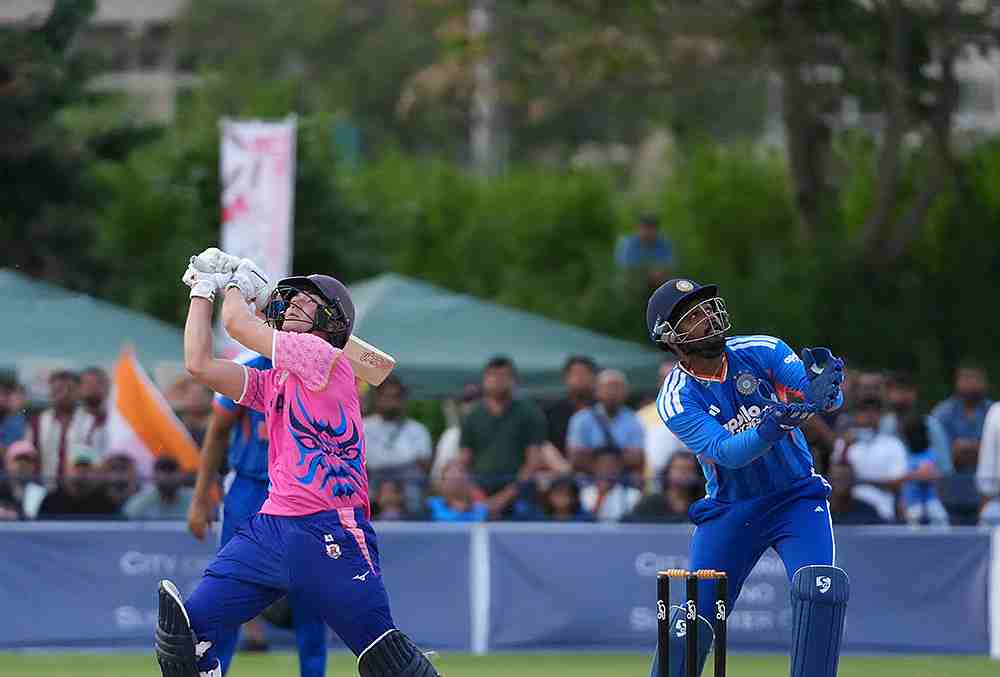
Team India managed to avoid the biggest upset when they narrowly beat Japan by two runs in the one-off T20I match on September 22 at Sano International Cricket Ground. But India’s victory was followed by a wave of criticism against Indian players. The major takeaway was in the final over of Japan’s chase, when a delivery from Axar Patel was called a wide before the on-field umpires overturned the decision.
The reversal came after Indian captain Shreyas Iyer questioned the call. Now after India’s victory, there has been huge criticism on social media that India had benefited unfairly. However, former India batter Aakash Chopra asserted that the uproar overlooked an important detail in the playing conditions
"People are saying that India beat Japan by cheating. This is being said because a wide was overturned, and the decision was reversed because India put pressure. People are just creating chaos. There are a lot of people who want to abuse India. You cannot say that we won unfairly, because it was not unfair," Chopra said on his YouTube channel.
Chopra said that according to the new rule, when a batter changes position to attempt a reverse sweep or switch-hit, the distinction between leg side and off side changes for the purpose of judging the wide.
"My understanding at the time was actually wrong. If you don't hit the switch hit, if you have not swapped your hands, that means you have not become a right-handed batter from a left-handed batter. I felt that the wide line on both sides is given in favor of the bowler when a switch hit is played, not when you play a reverse sweep," Chopra said.
"The second complication was that, at the time of delivery, right when the bowler released the ball, did the batter change his stance or not? My initial understanding was that if the stance is not changed before the ball is bowled, then wide shall remain a wide. But my understanding was wrong. I went through the rules and listened to the umpires, and according to the new ICC rules, it does not discriminate between a switch hit and a reverse sweep."
"So, point one, they view both shots in the same way. Secondly, whether the ball is in the hand or released from the hand, it does not matter when you change your position. It will be counted as the batter having changed his position. So, the benefit of the doubt will go to the bowler. You are both a left-hander and a right-hander in the eyes of the law," Chopra said.